
I remember seeing photos of the Great Pacific Garbage Patch as a kid and being unable to understand how so much waste could accumulate in such a beautiful landscape. I struggled to grasp the truth of human inventions outliving the sea creatures whose photographs I’d cut out from the pages of National Geographic and taped to my wall. That the same plastic gloss encasing their photos might be the same substance as the hard shell of a years-old pop bottle slowly releasing microscopic pieces into the ocean left a bitter irony in my mouth.
As plastic pollution mounts higher in landfills, tangles in ocean kelp, and works its way into the bloodstreams of humans and animals, the need for a unified solution presses closer. Discussions are taking place at a global level, but whether serious change will be enacted remains to be seen.
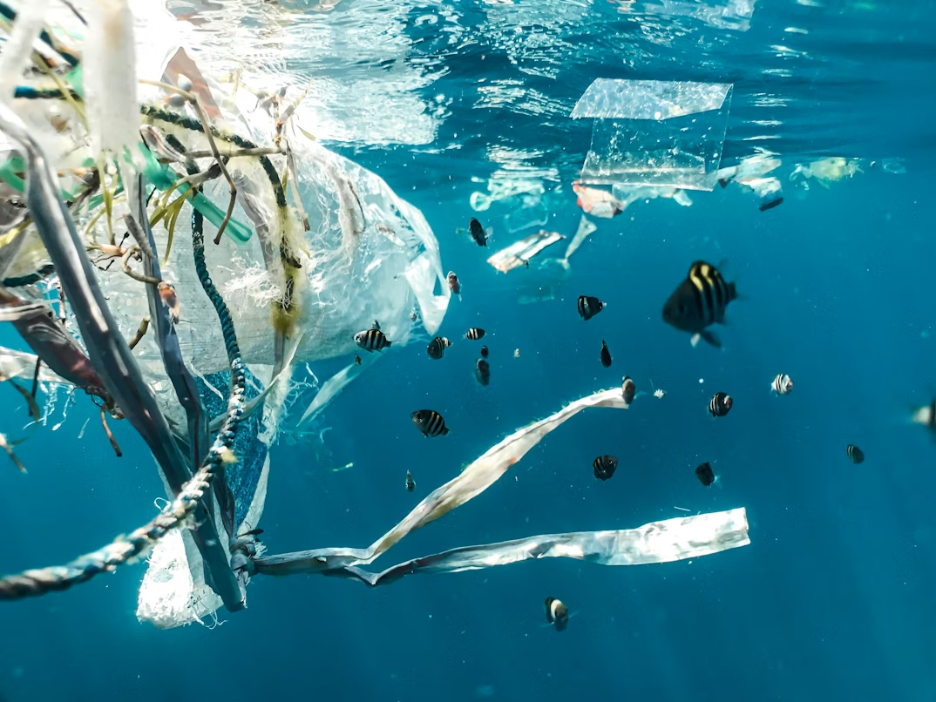
Photo by Naja Bertolt Jensen on Unsplash
Slow Going at the International Level
In March 2022, at a virtual meeting in Nairobi, Kenya, the United Nations Environmental Assembly (UNEA) adopted a resolution to end plastic pollution. At this meeting, the UNEA was presented with the World Wildlife Foundation’s petition to end plastic pollution, which included 2.2 million individual signatures. Later that year, in Uruguay, the first meeting from the Intergovernmental Negotiation Meeting (INC-1) resulted in more than one hundred countries agreeing to take serious action on plastic pollution by developing a legally binding agreement. The Intergovernmental Negotiation Committee has hosted four meetings since then, its attendees jetting across the globe to France, Kenya, Canada, South Korea, and Switzerland.
The UNEA’s discussion of a plastic treaty aims to mitigate the effects of plastic pollution by developing circular economies with renewed recycling efforts, investment in bio-plastics, and reducing the use of plastic. Without global intervention, the Global Plastic Action Partnership predicts that plastic waste will triple by 2060. But reliance on fossil fuels is deeply embedded in the globalized hunger for economic gain, and leaders are now pushing back on the agreement despite the warning signs of plastic’s staggering impact on the environment.
Progress at the INC has moved in small increments. The INC-5 meeting in South Korea in late 2024 was intended to be the last session, but it concluded without any decisions being made, despite nations such as Rwanda, Fiji, and Panama leading the charge for stricter regulations during the sessions. The committee reconvened for INC-5.2 in Geneva last summer, but this too led to no substantial progress. In advance of the Geneva meeting, the Trump administration reportedly urged other nations to reject plastic production caps, putting them at odds with over one hundred nations rallying for stricter production caps.
INC-5.3 will take place this month in Geneva, but it is planned to be a more informal session than the previous, as they aim to elect a new chairperson. With minimal progress, divisions continue to be sewn between major oil-producing countries that resist production caps and nations that advocate for stricter restrictions. While outcomes thus far have proved disappointing, the process is not entirely stagnant; technical monitoring reports show small progress towards a treaty.
Like any environmental topic, plastic pollution is a wicked problem, and it won’t be solved quickly, easily, or by any one nation. In a globalized system of oil greed and financial monopolies, those with the loudest and most powerful voices push the most against legally binding obligations. Major oil stakeholders such as the U.S., Saudi Arabia, United Arab Emirates, Iran, and Russia rely on the fossil fuel industry for trade and economic gain, and they are not willing to release any control of it for the sake of reducing plastic waste. The problem extends beyond just nation leaders, though; industry lobbyists have influenced negotiations significantly, especially petrochemical companies who profit greatly from the plastic industry.
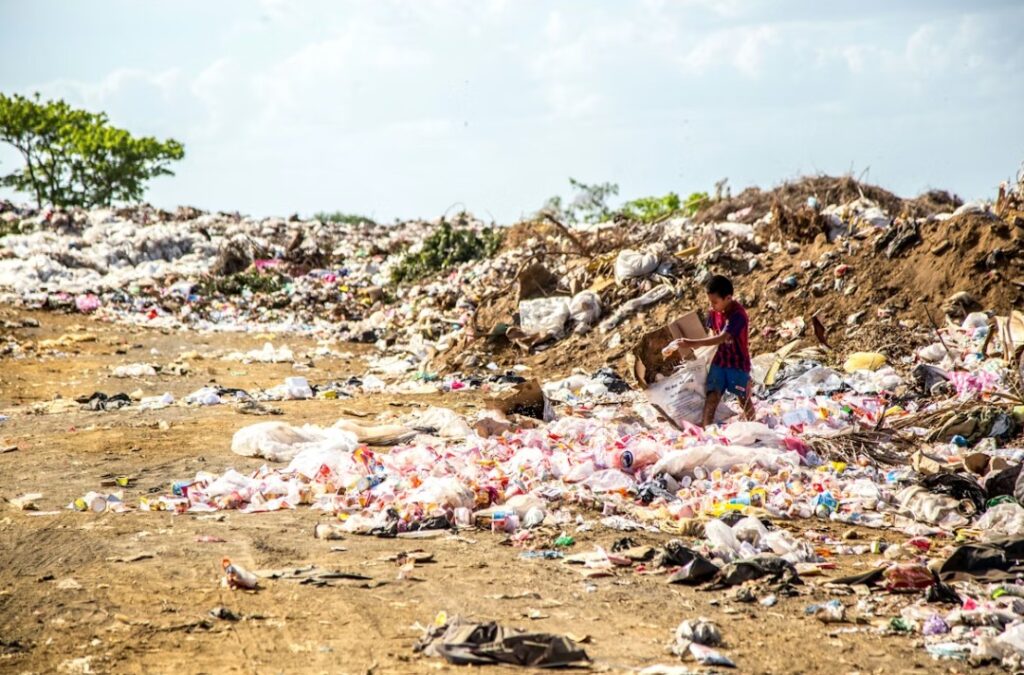
Photo by Hermes Rivera on Unsplash
Closer to Home
Environmentalists here in Canada hope our country can lead the charge in pushing for a plastics treaty, even as the nation continues to be a major contributor to the crisis. Over the past five years, landmark decisions have swung between favouring either side of the debate. Back in 2021, plastic was declared by the Liberal government as toxic under the Canadian Environmental Protection Act (CEPA). Then, in November 2023, the Canadian Federal Court of Appeal decided that calling plastic toxic is unconstitutional and reversed the decision. But the end of January 2026 saw the Federal Court of Appeal unanimously agree that the previous ruling from 2023 was wrong. While environmental advocates celebrate the major milestone, it remains to be seen how the government will use this power to fight plastic waste, especially with the tense international trade climate, steep cost of living, and recent nation-building efforts occupying federal attention.
This month, the Canadian government will join delegates in Geneva for INC-5.3. Action might not be taken immediately, and it might look different than the initial plastic treaty idea, but it can still be taken. There is still hope of a unified agreement that leads to changes as monumental as the Montreal Protocol to repair the damaged ozone layer, or the Stockholm Convention to regulate toxic chemicals.
As the UNEA continues to slowly negotiate solutions to the plastic pollution crisis, millions of tonnes of plastic are produced, thrown away, and release forever chemicals into our soil, water, and atmosphere.
Let’s hope that world leaders take serious steps in plastic reduction efforts so that we might one day have a world where children flipping through National Geographic feel only appreciation for nature and not the crippling weight of climate anxiety.
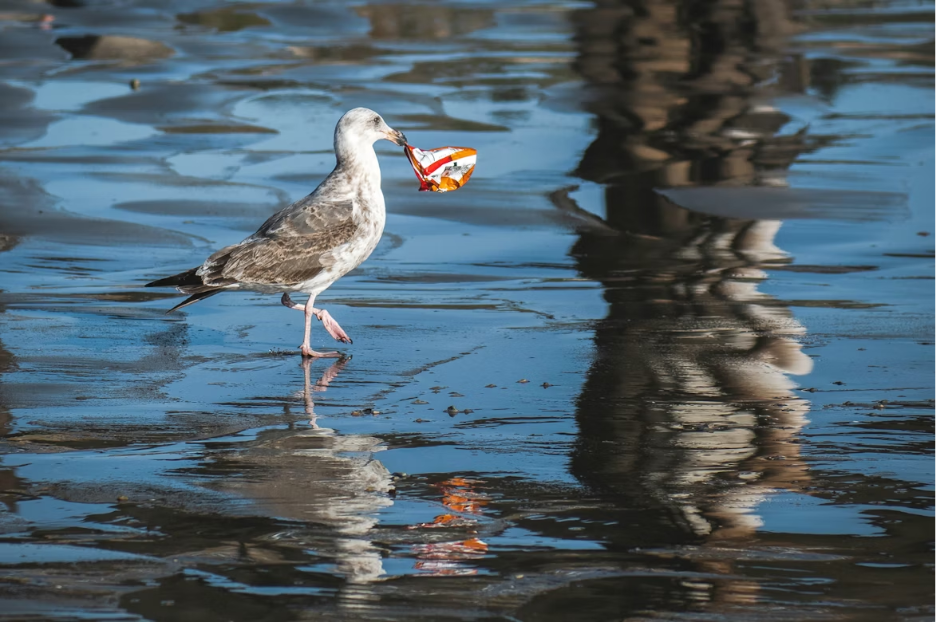
Photo by Tim Mossholder on Unsplash
Bio: Jennifer Boone is pursuing a Bachelor of Arts in Environmental Studies and English at The King’s University. She has a passion for learning, exploring nature, and telling redemptive stories.